
 Innovate
  Accelerate
  Engineers & Experience
  Quality Assurance
  Salesforce
  Application Development and Maintenance
  Full Cycle Development
  Consulting Services
  Staff Augmentation
  eCommerce
  Education
  Fintech
  Health & Wellness
  Healthcare
  Logistics
  Media & Entertainment
  Real Estate
  Travel
  Sports




Artificial intelligence (AI) is no longer just a buzzword or passing trend. Today, AI is reshaping industries worldwide by automating repetitive tasks, solving complex challenges, and improving efficiency. From healthcare to entertainment, Artificial intelligence is driving innovation and changing how businesses operate. Let’s explore how AI is transforming various sectors.
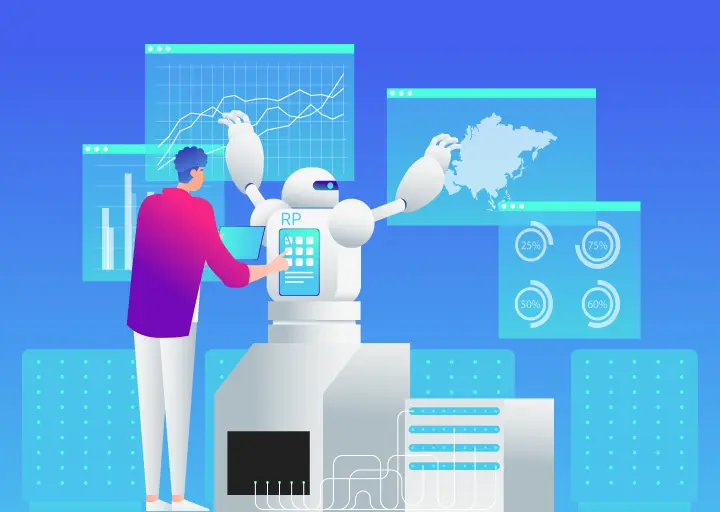
List of Industries Transforming Through AI
AI in Retail
AI is enhancing the retail experience by improving customer service and delivering personalized recommendations. Intelligent algorithms analyze customer behavior and preferences to suggest products tailored to individual interests. Retail businesses are also using AI to optimize inventory management and strengthen supply chain operations, ensuring products remain available when needed.
Customer support has also evolved with AI-powered chatbots that can answer queries, process orders, and resolve issues efficiently. Over time, these systems continue to improve through machine learning and customer interactions.
AI in Farming
Artificial intelligence is modernizing agriculture through precision farming and data-driven insights. AI-powered systems can monitor crop health, evaluate soil quality, and analyze weather patterns, helping farmers make informed decisions in real time. This leads to better crop yields, improved food quality, and more sustainable farming practices.
AI is also automating labor-intensive tasks such as planting, harvesting, and pest management, increasing productivity while reducing dependence on manual labor.
AI in Banking
The banking and finance sector was among the first to embrace AI, and its impact has been significant. Financial institutions use AI-powered chatbots to automate customer support and improve user experiences.
AI also plays a critical role in fraud detection by analyzing large volumes of transaction data to identify suspicious patterns. Additionally, it assists banks with risk assessment, market analysis, and compliance management, helping organizations save time, reduce costs, and improve operational accuracy.
AI in Education
AI is reshaping education by creating more personalized learning experiences. AI-driven platforms can identify students’ strengths and weaknesses, allowing them to deliver customized learning paths based on individual needs. These systems adapt in real time, offering additional support or advanced challenges depending on student performance.
Beyond learning, AI is streamlining administrative tasks such as grading, scheduling, and data management, enabling educators to focus more on teaching. As a result, education becomes more accessible, efficient, and tailored to every learner.
AI in Medicine
The healthcare industry is experiencing major advancements with the help of AI. Intelligent systems can rapidly analyze large and complex medical datasets, supporting early disease detection and improving patient outcomes. AI tools are particularly effective in interpreting diagnostic images like X-rays, MRIs, and CT scans, helping doctors identify conditions such as tumors or fractures with greater accuracy.
AI is also supporting personalized treatment plans by adapting therapies to the unique needs of each patient. This approach improves treatment effectiveness while reducing potential risks.
AI in Transportation
AI is revolutionizing transportation through autonomous vehicles and smarter traffic management systems. Self-driving cars are already becoming a reality, and ongoing advancements could lead to safer and more efficient travel in the future.
In logistics and supply chain management, AI helps businesses reduce costs and improve delivery times. By analyzing traffic conditions and weather patterns, AI systems can determine the most efficient delivery routes, ensuring timely shipments and lower fuel consumption.
AI in Manufacturing
Manufacturing is another industry benefiting greatly from AI-driven innovation. Automation powered by AI is improving production efficiency, minimizing errors, and increasing overall output. Predictive maintenance systems can detect equipment issues before they become major problems, reducing downtime and maintenance costs.
AI-powered robots are also handling repetitive tasks with precision, while advanced AI models optimize supply chain management and production scheduling. These improvements allow manufacturers to achieve better quality control, lower operational costs, and higher productivity.
AI in Entertainment
The entertainment industry is using AI to enhance creativity and streamline production processes. In filmmaking, AI supports visual effects, script analysis, and even music composition. AI tools can also predict audience preferences, helping creators produce content that resonates with viewers.
In gaming, AI is making experiences more immersive by creating adaptive and interactive environments. AI-powered characters can respond dynamically to player actions, increasing both realism and engagement.
Final Thoughts
AI is opening new doors for innovation, efficiency, and personalization across industries. As businesses continue adopting AI technologies, organizations that build cusomized AI solutions for their specific needs will be better positioned for long-term success. The AI revolution is already here, and embracing it is essential for staying competitive in the future.
To stay updated on the latest AI trends and innovations, visit the Appinventors blog today!

Ana Arora
VP PresalesAna is a Vice President of Presales with over 9 years of experience in the tech industry. Known for her strategic vision and adept leadership, Ana excels in driving business growth through innovative solutions. Her expertise in client relationships and team development has consistently delivered outstanding results, making her a respected leader in her field.